Office Clearance Victoria — Recycling and Sustainability
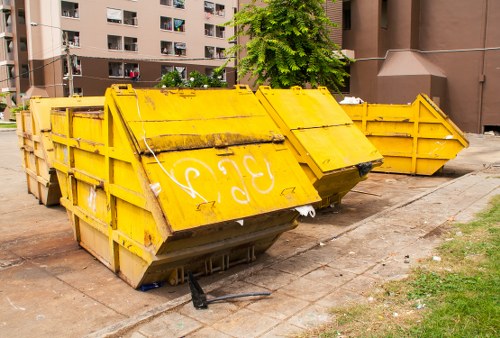 At Office Clearance Victoria we put the eco-friendly waste disposal area at the core of every service. Our approach to an environmentally friendly clearance and a sustainable rubbish area is practical and measurable: every removal is assessed for reuse, refurbishment and proper recycling. We prioritise diverting items from landfill by repairing, donating or sending to licensed processing routes. This page outlines our targets, the local transfer stations we use, charity partnerships and our low-carbon van fleet so clients can see how we deliver green office clearances.
We operate across Westminster and neighbouring boroughs where municipal policies encourage source separation of dry recyclables, glass, food and paper streams. Our teams are trained to work with existing borough systems for waste segregation, supporting local schemes and ensuring mixed loads are minimised. By aligning with each borough’s approach to waste separation, from separate food waste bins to dry mixed recycling, we reduce contamination and maximise recovery rates on-site and in transit.
 The objective is clear: we aim for an 85% recycling percentage target for all office clearance projects within 24 months of service implementation. That target covers items reclaimed for reuse, materials sent to Material Recovery Facilities (MRFs), and properly processed hazardous or specialist waste streams. We monitor every job so our sustainability KPI is transparent and auditable — waste weights, destination, and final processing are tracked and reported.
How we manage sustainable rubbish areas and local logistics
Our logistics are designed around low-impact routes and licensed transfer hubs. Where possible we consolidate collections to reduce vehicle miles and use low-emission scheduling. We work with municipal transfer stations and licensed materials recovery facilities across the city and nearby boroughs — routinely routing through Westminster’s permitted transfer facilities and collaborating with partners in Lambeth and Southwark to ensure compliance with local environmental controls.
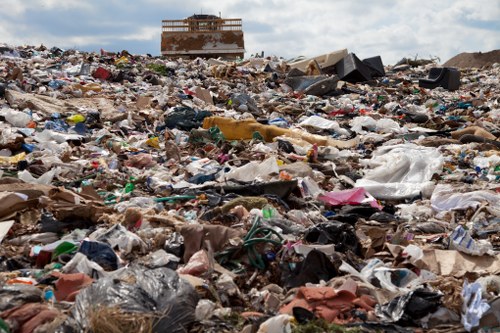 When materials require specialist handling we use accredited transfer stations and processing centres rather than sending everything to a general skip or landfill. Typical recycling streams we separate and process include:
- Paper and cardboard — baled and sent to pulping facilities.
- Plastics and mixed containers — sorted and forwarded to MRFs.
- Glass — cleaned and transported for remanufacture.
- Furniture and IT equipment — assessed for reuse, refurbishment or secure data-wiping and recycling.
- Light fittings and batteries — diverted to specialist recycling routes.
These steps turn a conventional clearance into a true green waste disposal area operation: we separate, record and optimise material flows every time.
Charity partnerships and social value from clearances
We have active partnerships with local charities and social enterprises to maximise reuse and community benefit. Through collaborations with organisations such as Emmaus, British Heart Foundation and local refurbishment charities, many desks, chairs and IT items are given a second life. Partnering with charities reduces waste volumes and supports local social initiatives — a key aspect of our sustainable office waste management strategy.
 Alongside major charity partners we work with smaller community groups and local projects that accept functional office furniture and equipment. This is part of our commitment to ensure that wherever items are suitable for reuse they are diverted from recycling streams and instead used to support training programmes, job placements and community hubs. These social outcomes form part of our wider sustainability promise.
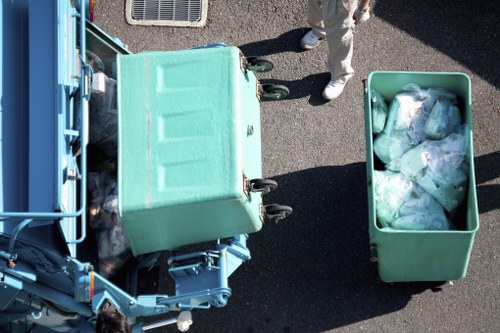 Our fleet supports all of the above with a focus on low-carbon operation: we deploy hybrid and fully electric vans for inner-city jobs and low-emission diesel alternatives for longer trips, all maintained to reduce fuel use and emissions. Using low-carbon vans in dense urban areas helps cut particulate pollution and supports borough air quality objectives while still delivering an efficient office clearance service.
We also provide advice to clients on how to set up a dedicated sustainable rubbish area at their premises: simple steps such as marked, segregated collection points, clear labelling and designated holding areas for reusable furniture dramatically increase diversion rates. Training staff in separation at source and scheduling periodic clear-outs with our team improves outcomes and makes the office part of a circular economy.
Reporting is an important part of our service. After each clearance we provide a breakdown of tonnages, destinations and percentages recycled versus re-used, so clients can see progress towards the recycling percentage target and their contribution to a greener local waste infrastructure. Transparency ensures accountability and helps clients meet their own sustainability policies and regulatory responsibilities.
Office Clearance Victoria is committed to continuous improvement: we review routes, supplier performance and client outcomes regularly, pilot electric vehicle deployments and expand charity and social enterprise networks. By integrating an eco-friendly waste disposal area philosophy into every clearance, we help businesses reduce their environmental impact, support local borough recycling schemes and create measurable social value from surplus office materials.
